

OTis gets a friend
It started with Otis about a year and a half ago.
Then, Piper moved in last summer.
I’m not talking about pets or relatives that won’t leave… these are my sourdough starters!
Otis came from a friend… isn’t that how these things always start?! The gifted starter wasn’t named Otis at that time; that was my doing. My wife didn’t agree with that decision, but despite her protest, the name remains.
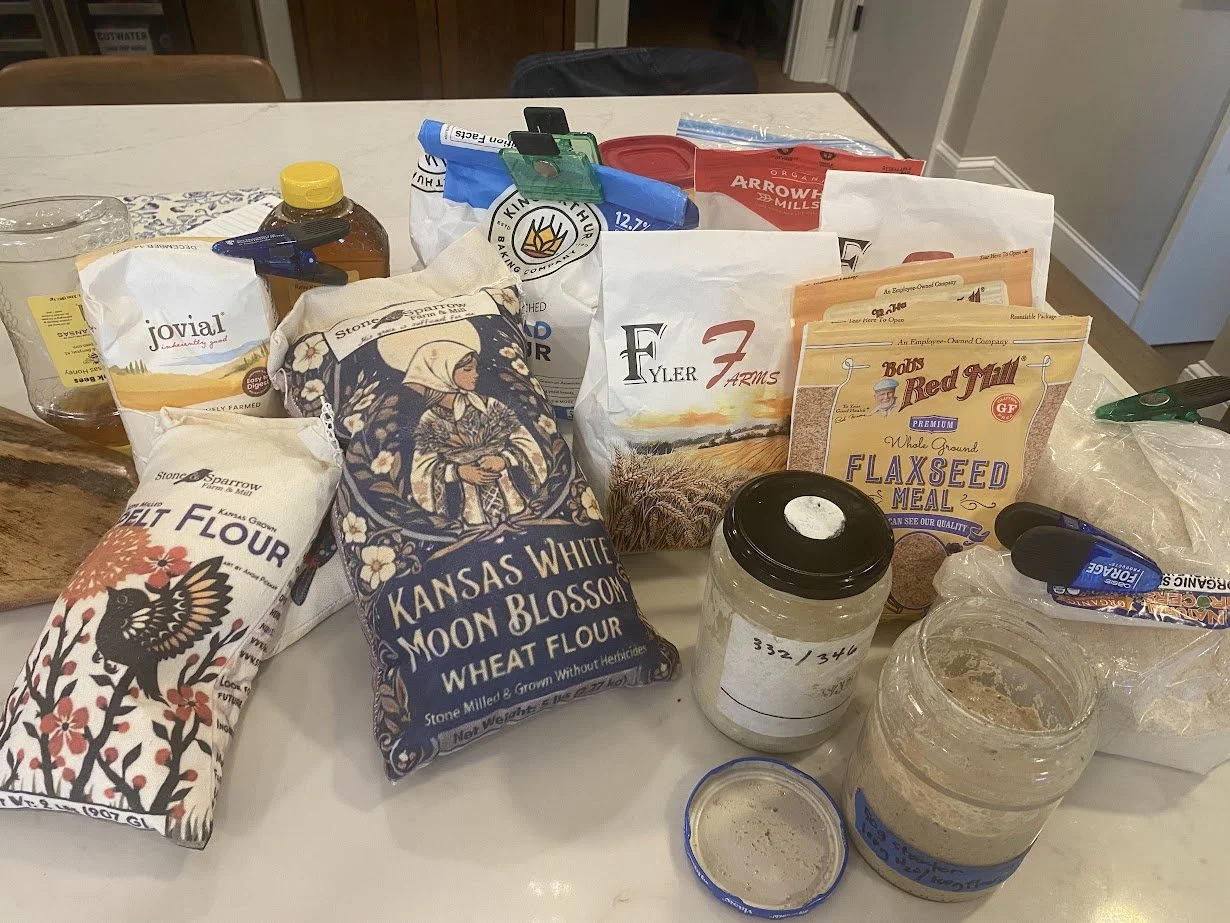
Otis started off as a simple bread flour starter, but very quickly I started adding things… flaxseed meal, whole wheat flour, spelt, einkorn, kernza, wheat bran, rye, and more recently millet flour. I know it sounds a little excessive, and it probably is, but that’s the way I roll! This is my whole wheat/mixed-grain starter.
Then Piper came along.
My mixed-grain starter is great for my rustic loaves. The flavor is amazing! But it’s not always the best choice. Sometimes, just a simple white bread flour starter works better.
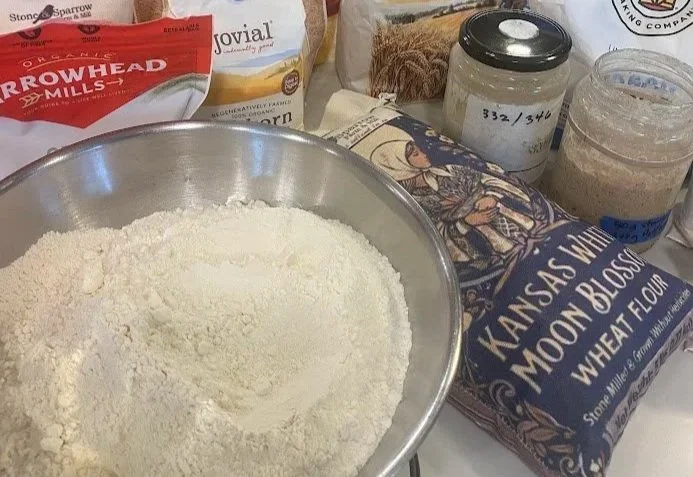
So, Piper was born out of necessity.
She’s made with white bread flour… but of course, I can’t do just plain bread flour. I like to add a little einkorn (an ancient wheat) and a touch of rye just to give it a little more character. It still has a very white, very smooth texture, and it’s perfect for English muffins, white sandwich bread, hamburger buns and bagels.
So, that’s two batches of starter and a whole fleet of flours to support them.
Just like a good toolbox full of all the right tools, our kitchen is now full of all kinds of flour and other bread ingredients for making sourdough bread. I like to blame one of our daughters for most of that. Okay...so, that may be a stretch!
I’ve been having fun learning about sourdough baking and learning about all the different kinds of flours outside of the normal everyday grocery store selections. That’s gotten me into some different odds and ends, but...

Cameron Rees, General Manager
...one of our daughters has definitely been contributing to the problem! She likes picking things up for me at her local farmer’s market. She has grabbed a number of different flours for me in the past, and over the last few weeks, she’s supplied me with a whole assortment of new flours, all locally grown and locally milled.
The pantry is getting fuller… so it looks like I’ve got a lot of baking to do!
There’s plenty of gardening out there left to do, too!
It’s lush and green right now, and it looks like we’re going to keep moisture in the forecast for the near future. Plants are loving it. It’s a nice way to start summer.
—Cameron Rees
Stop Japanese Beetle Damage!
What a wet start to the spring we have had!
I was starting to believe that we wouldn’t ever begin to dry up. Sure enough, Mr. Summer is here!
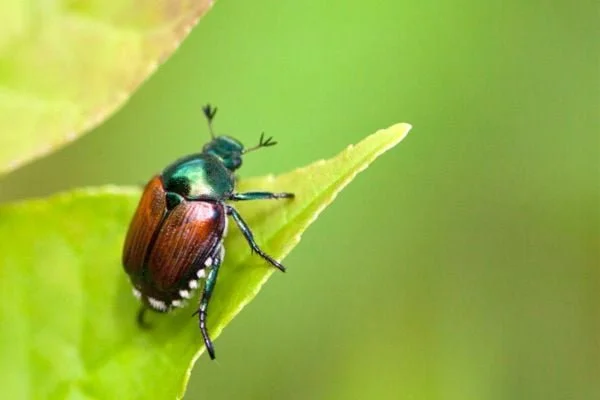
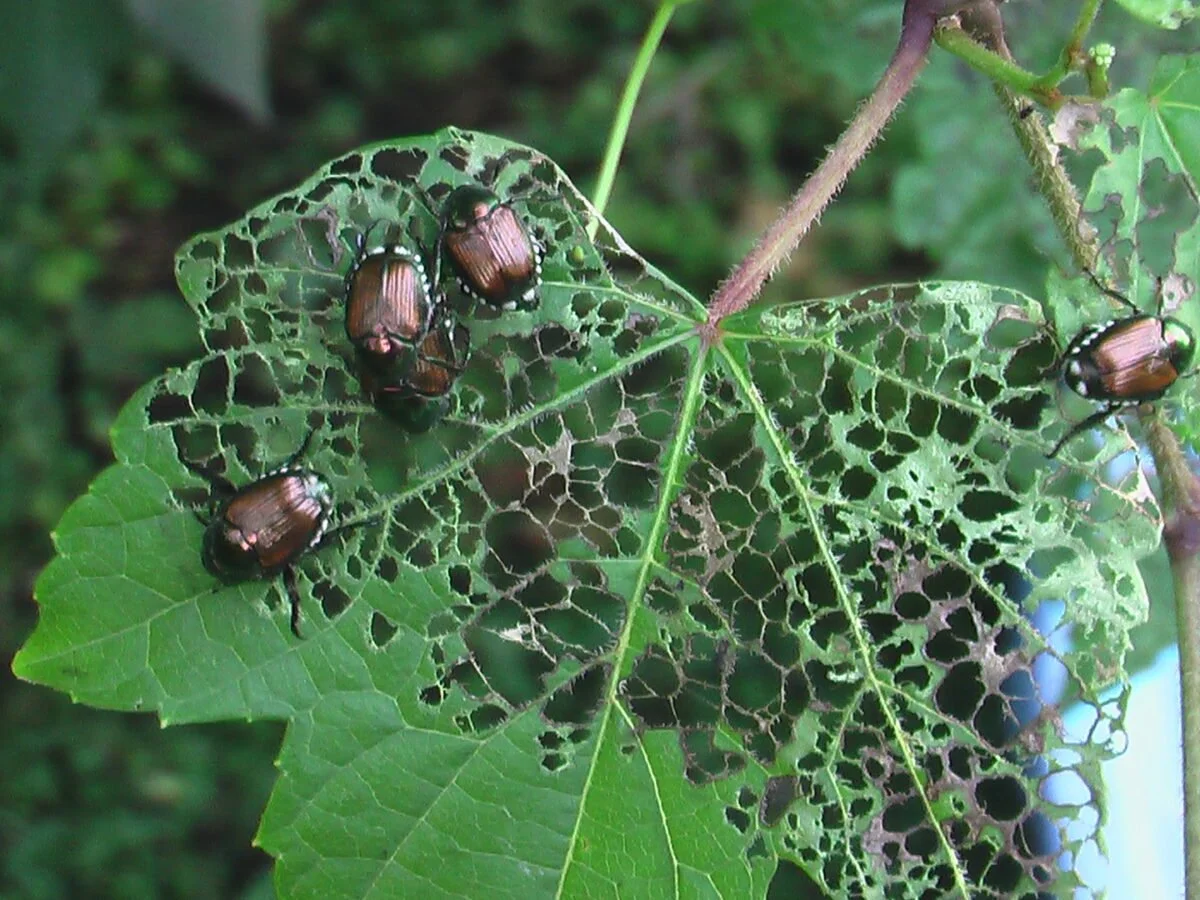
I bet you’ve started to keep a lookout for all the fabulous insects that have slowly started to emerge. Well, one in particular you should keep an eye out for is those pesky Japanese Beetles. These hungry little buggers are in the midst of their breeding cycle and looking to devour as much as possible in the meantime.
Not to be confused with the June Bug, which resembles a whole lot of our friends, Japanese beetles bear a metallic green head with copper/bronze wing covers. They travel around from plant to plant anywhere from 4 to 6 weeks while they are mating. They are most active on warm days, preferring to feed on plants exposed to full sun, and can devour a plant from top to bottom.
Not to worry, we’ve got you covered!
We recommend using Fertilome Spinosad Soap. Apply to the adults, and it will knock them off the plant in minutes, dying later.
Let’s face it, they are going to come regardless, so why not be the best prepared for when they do?
Good luck out there, and as always, we are here to help!
natives: on trend & essential!
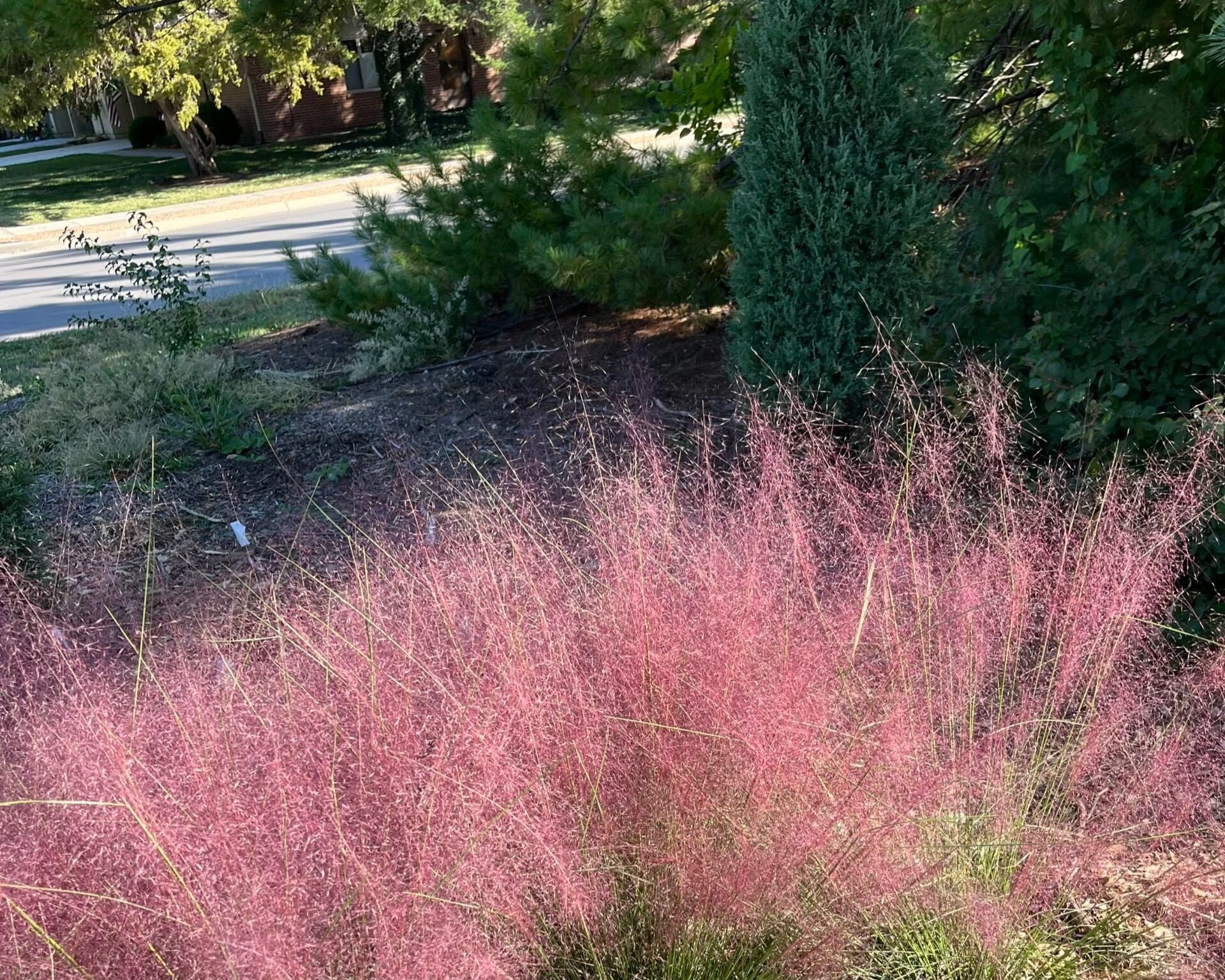
Growing up, landscapes were dominated by junipers...spreader junipers across the front of the house with upright junipers on the corners. It was a landscape repeated over and over again.
I spent a lot of my early days with this company ripping out a lot of those landscapes. In most cases, they were very old and very overgrown. Removal often revealed a beautiful home that had been hidden for years. My job was to replace things with a new, more modern-looking landscape.
That more “modern” landscape would see a lot more plant diversity. This is about the time the use of perennials and ornamental grasses really started to gain traction, and that, along with all the new flowering shrubs hitting the market, provided a tremendous plant palette to work with.
I’ve always felt like these more diverse landscapes brought a lot of new life into landscapes. Don’t get me wrong, I’m a big conifer (evergreen) fan, but I also like the dramatic seasonal changes that deciduous shrubs, perennials and grasses offer.
There’s just so much more to see and enjoy! And today, plant diversity has only gotten better.
New plants are continually introduced: more compact habits, extended bloom times, new flower colors, better fall colors, and the list goes on.
However, one of the biggest changes I’ve seen in recent years is the popularity of natives. Native plants have become cool.
The use of native plants, whether locally or regionally native, has become commonplace and, in many cases, highly desired.
There is the obvious advantage of being adapted to our weather. They grow here natively, so they ought to be able to put up with all the weather-related nonsense we get hit with. But equally... or maybe even more importantly...they are essential parts of our ecosystem.
Native plants support the native environment.
As human development continues to take away more and more native/natural areas, replacing some of what we’ve lost with our landscaping efforts can help.
And as landscape trends continue to evolve, the use of natives and the popularity of more naturalistic landscape designs is becoming more common.
And I think that’s a good thing… for all of us and for the rest of the world out there that surrounds us.
We continue to seek out and stock all kinds of native trees, shrubs, grasses, and perennials, and are excited to see so many embracing their use. If you’re interested in learning more about native plants, stop by, check things out and ask us some questions.
—Cameron Rees
NATIVES for aLL seasons (take two)
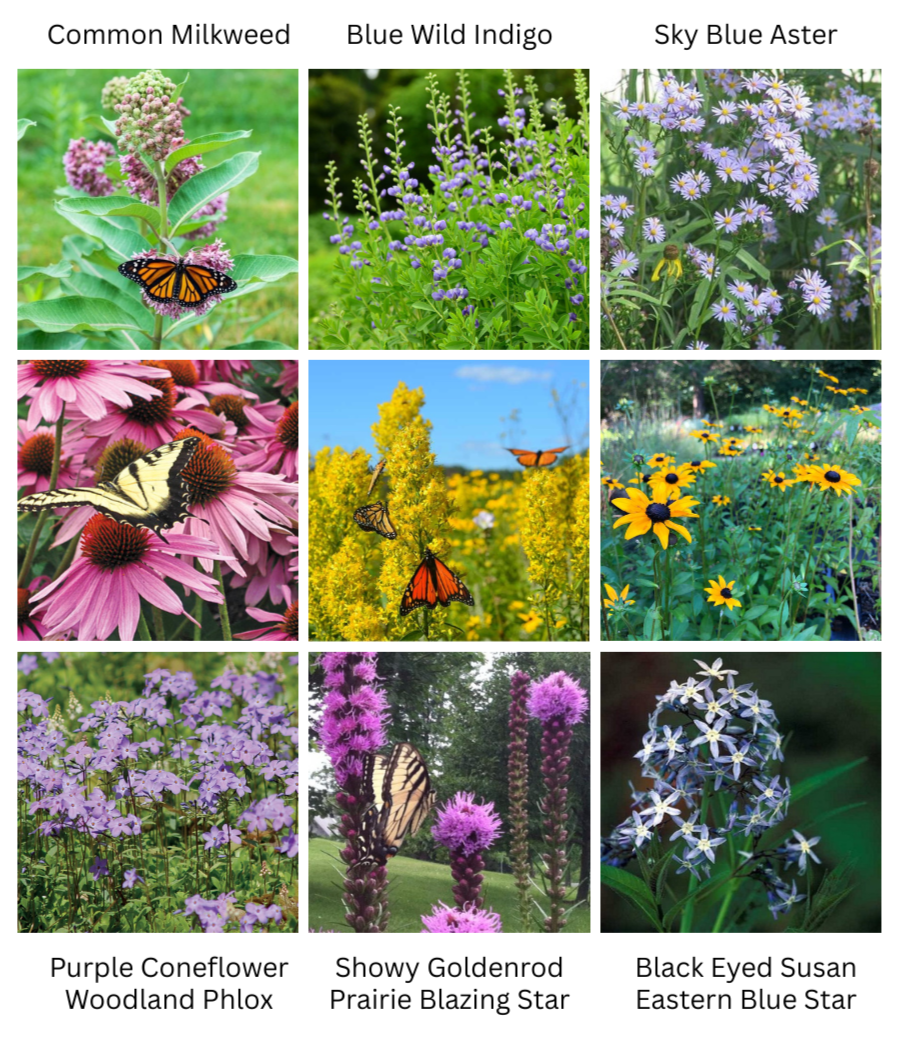
Note: This article from our last issue of The Dirt pairs so well with Cameron’s article above that we thought we’d bring it to you again. Misty has put together some perfect… “Natives to Plant for All-Season Color and Their Benefits.”
SPRING & EARLY SUMMER
Woodland Phlox (Phlox divaricate) – Vital nectar source for waking pollinators.
Blue Star (Amsonia) – Attracts early-season pollinators.
False Indigo (Baptisia) – Provides nectar for early-season bees, especially bumblebees. Serves as a host plant for native butterfly caterpillars. Songbirds love the seeds.
MID-SUMMER
Coneflower (Echinacea) – Provides a steady supply of nectar and pollen.
The seeds of the un-deadheaded blooms will feed songbirds.
Milkweed (Asclepias) – Provides vital habitat for endangered monarch butterflies. Monarchs eat nothing but milkweed leaves. The plant’s sap provides them with natural toxins that make them unpalatable to predators. Nectar is a favorite for native bees, hummingbirds, and other butterfly species.
Black Eyed Susan (Rudbeckia) – Nectar source for bees, hummingbirds, and other beneficial insects. Leaving spent seed heads on the stems over winter provides a reliable food source for songbirds.
LATE SUMMER & FALL
Aster (Symphyotrichum) – Provides late-season nectar and pollen at a time when other blooms are scarce. Act as an essential nursery and food source for the caterpillars of specific native butterflies.
Blazing Star (Liatris) – The fluffy flower heads are packed with nectar.
Goldenrod (Solidago) – Provides vital nectar and pollen when other flowers have faded. It is a crucial energy source for honey bees building up their winter reserve. Seed heads provide energy-rich food for songbirds.
—Misty Brown